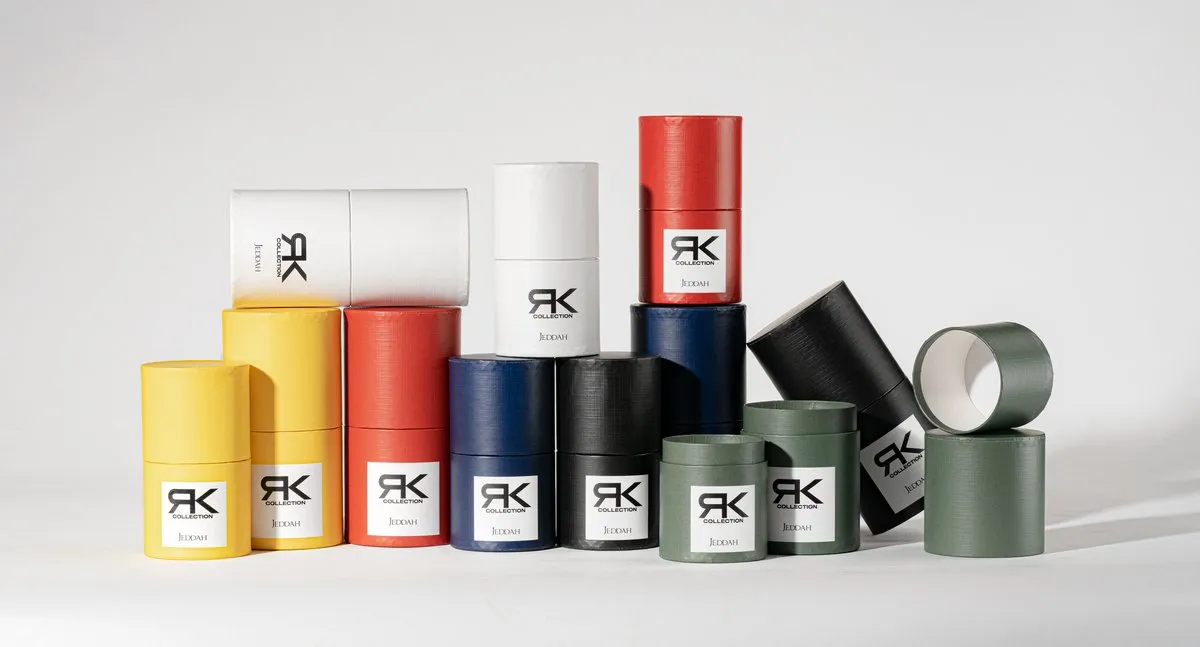
Fragrance packaging has an unusual constraint: the product and the pack are judged together. A bottle that looks premium on a shelf loses that impression the moment it arrives in a box that rattles, a lid that does not sit flat, or a colour that does not match the label. That is why a perfume project starts with measurements, not artwork.
Step one: the bottle decides everything
Four numbers define the pack: body diameter, total height, cap width and filled weight. From those we set the insert geometry, the internal depth of the box, the board thickness and the closing method. A narrow bottle in a wide box needs an insert that grips the body; a heavy bottle needs a floor that does not bow when it is lifted.
If you are choosing the bottle at the same time as the packaging, tell us both options — it is cheaper to adjust the box than to re-tool one.
Rigid box, tube or sleeve
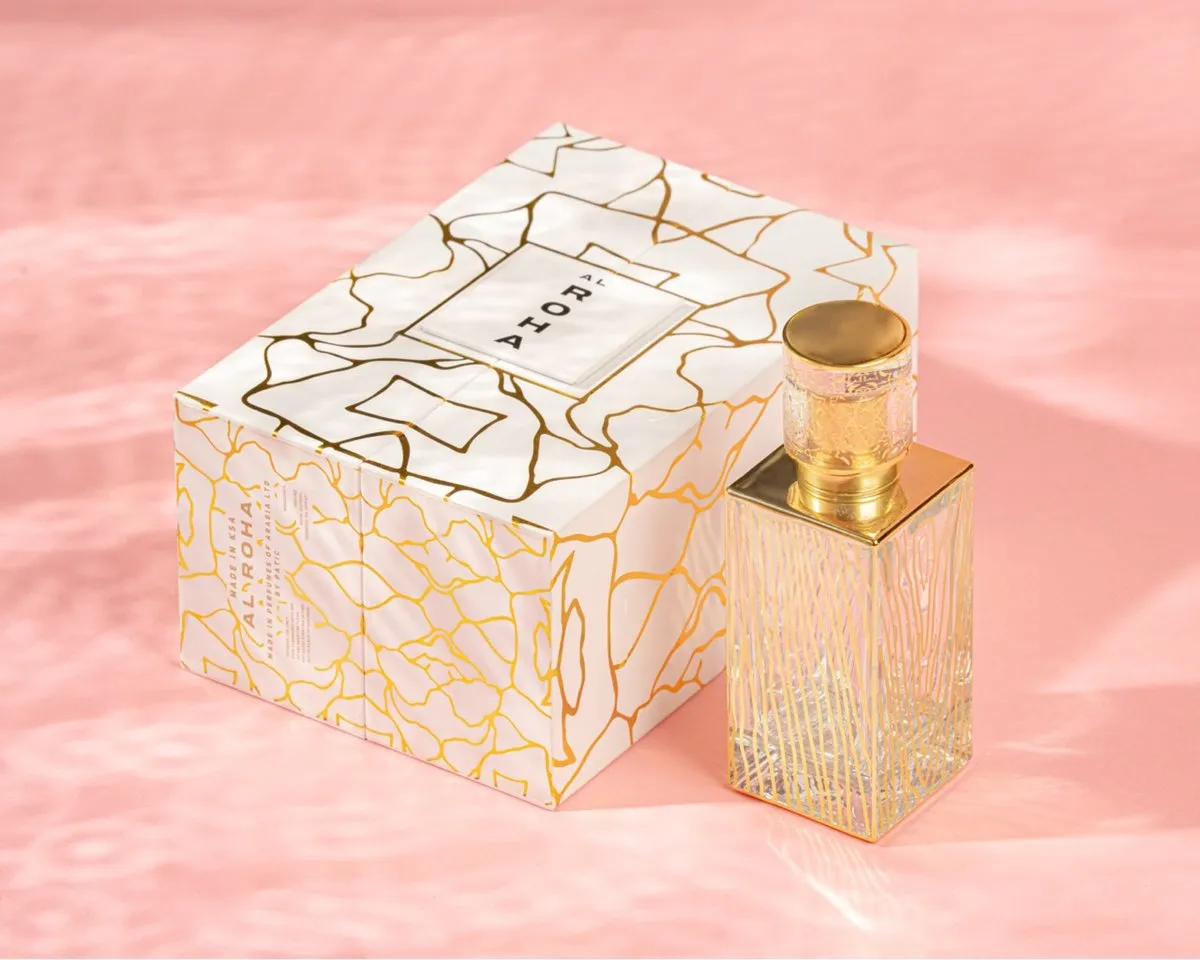
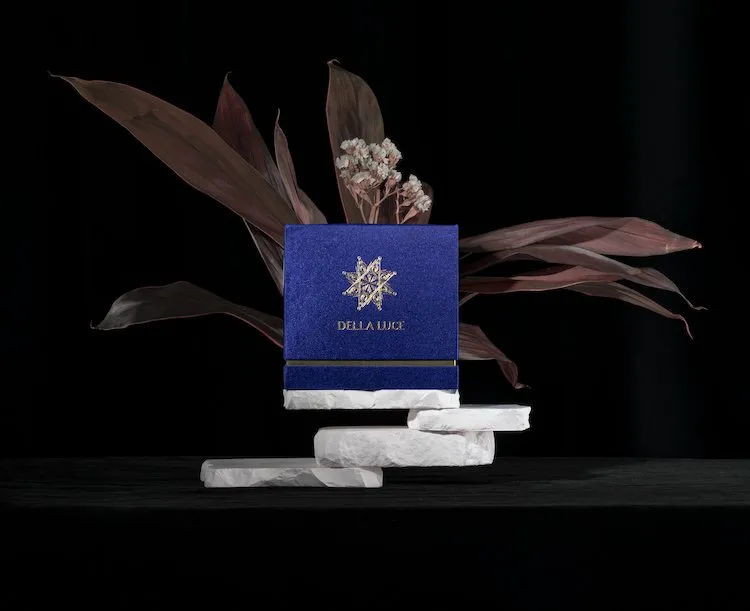
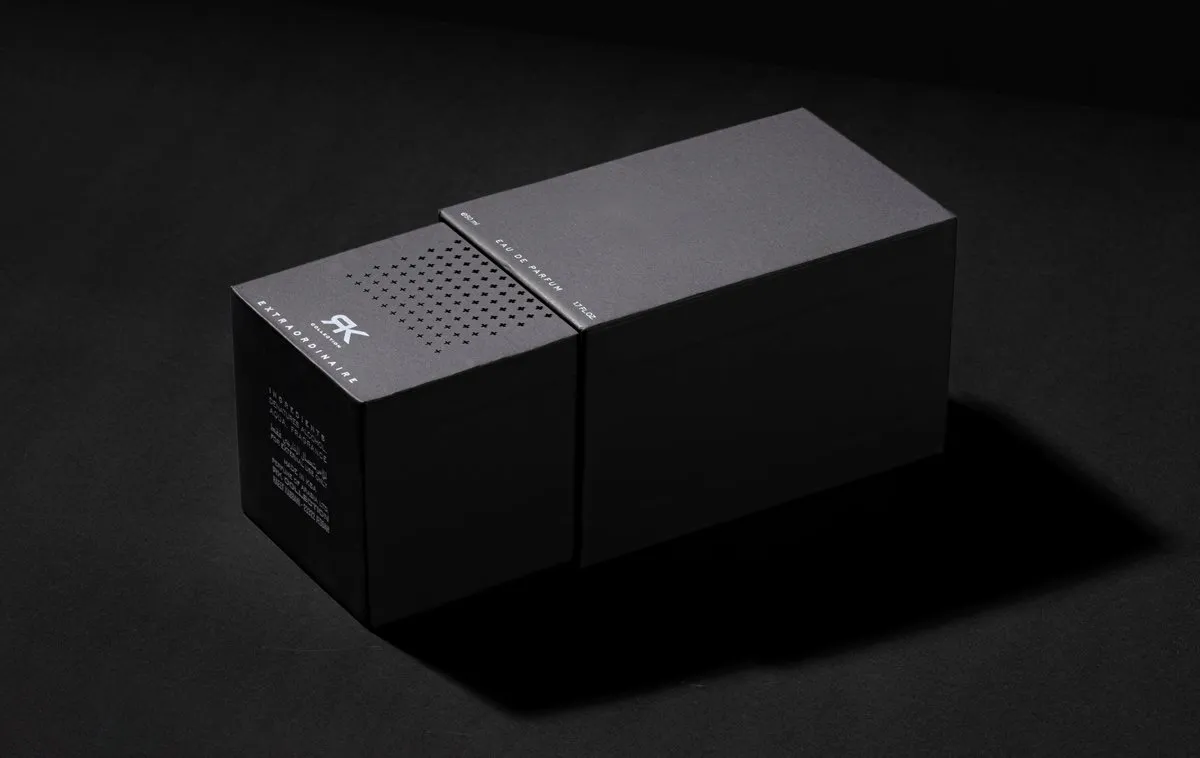
Rigid setup boxes are the standard for premium fragrance: greyboard walls wrapped in printed paper, with magnet, drawer or lid-and-base closures. They hold shape, protect the bottle and present well when opened. This is the usual choice for gift sets, collection boxes and anything sold with a card, a pouch or a second product.
Paper tubes are wound cylinders printed on the wall with a matched lid. They feel more tactile than a box, weigh less to ship, and give a fragrance a distinctive pack at a lower unit cost. Tubes are common for single bottles, attars and oils.
Printed sleeves over a tray give the printed look of a box with a lighter structure — useful when the bottle already has its own protective shape.
Inserts
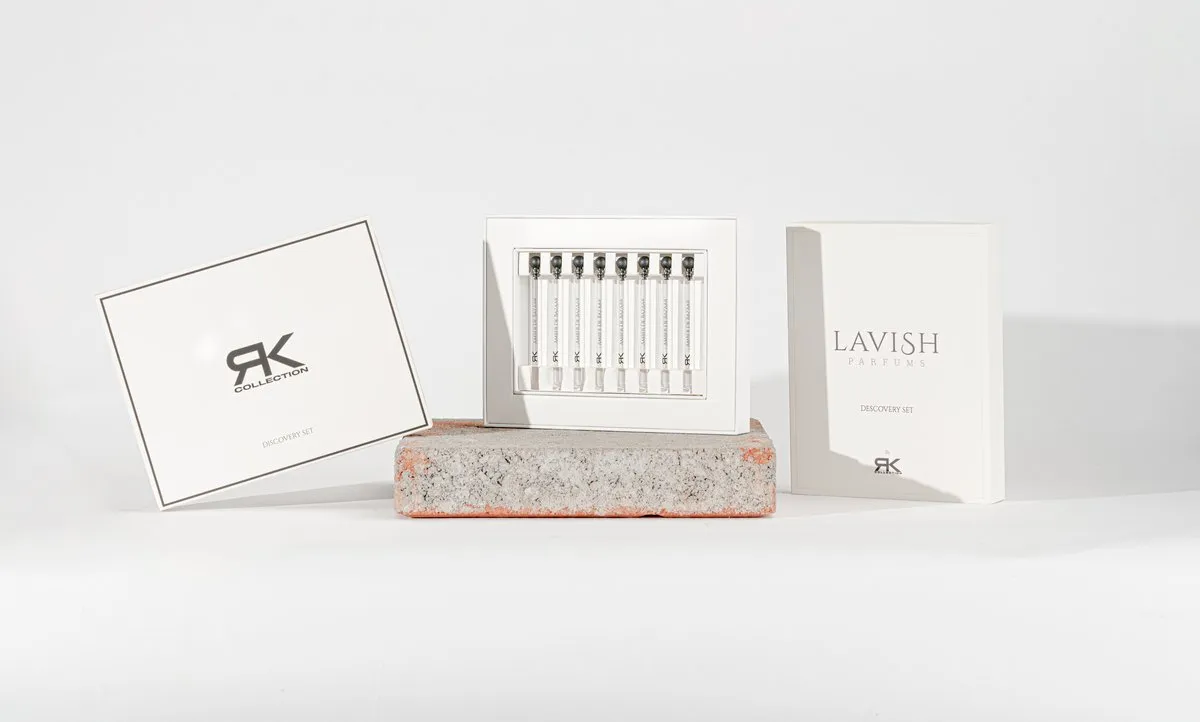
The insert is what turns a box into packaging. We die-cut paper, EVA or flocked inserts to the exact dimensions of each item, so the bottle sits at a fixed height, the neck is supported and the cap does not touch the lid. For sets, the same insert holds several vials, or a bottle plus a card and a sample.
An insert that is 1 mm out is often the difference between a gift pack that feels engineered and one that feels improvised — which is why the pre-production sample is tested with the real bottle inside.
Finishing that carries the brand
Foil stamping for the logo and the name, embossing and debossing for tactile detail, spot UV for gloss-on-matte contrast, and matte, gloss or soft-touch lamination for the surface feel. Ribbons, elastic bands, magnets and shoulder-neck closures are produced in-house, so the finishes and the structure can be approved together.
For colour: we print CMYK with Pantone spot colours and proof the pack against the bottle label so the two match in daylight and under shop lighting.
Discovery sets, samples and refill packs
Fragrance brands increasingly sell discovery sets, travel sizes and refills, which are packaging-led products: a tray of vials, a printed card, a compact box or a tube. These are usually produced as one project so the levels match and the set ships assembled.
What makes a fragrance project run smoothly
- Send the bottle or its exact dimensions, plus the quantity and the target date.
- We confirm the structure, the insert, the board, the finishing, the MOQ and the price.
- You approve a pre-production sample, ideally with your bottle inside it.
- We produce, inspect, assemble and pack, then ship with the documents your customs needs.
Do that and the second order — the one that has to match the first exactly — is straightforward, because the die, the sample and the specification are already on file.