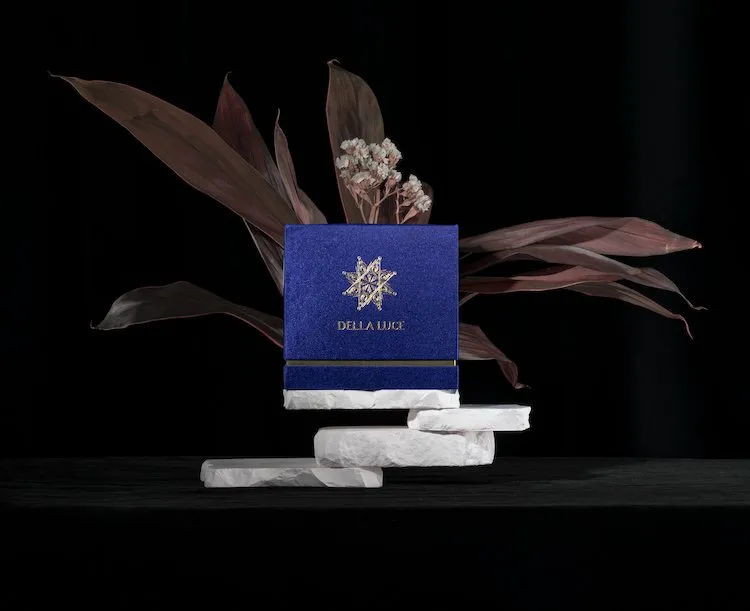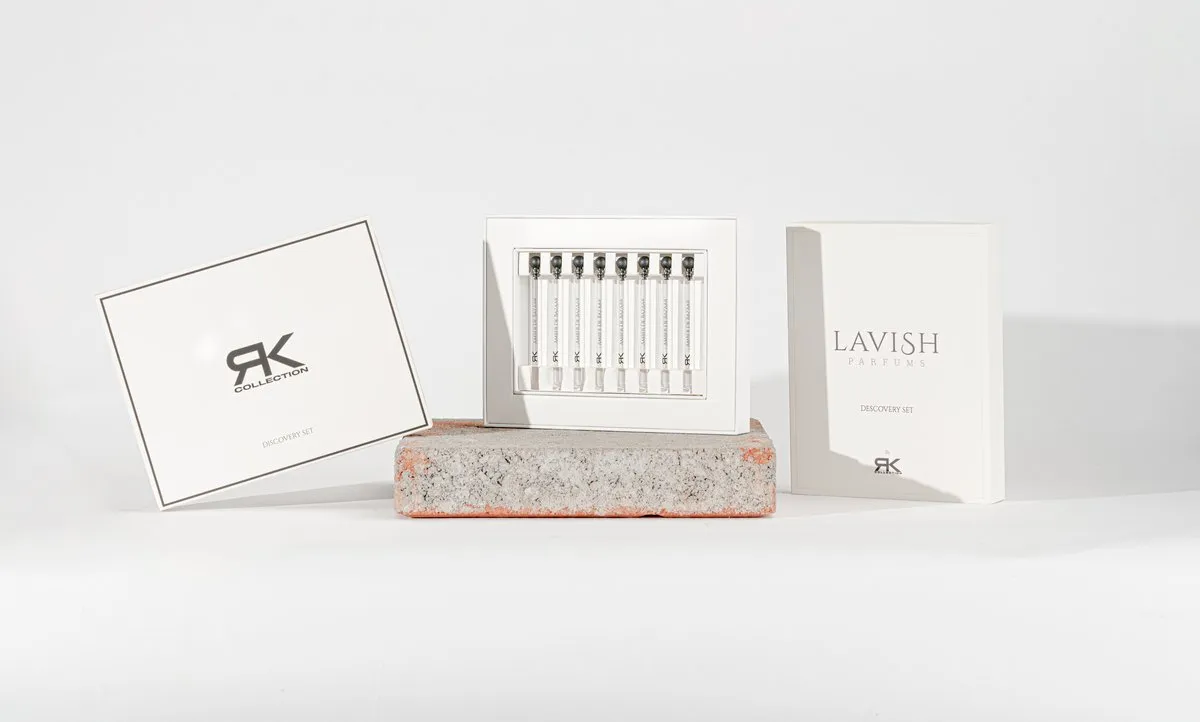
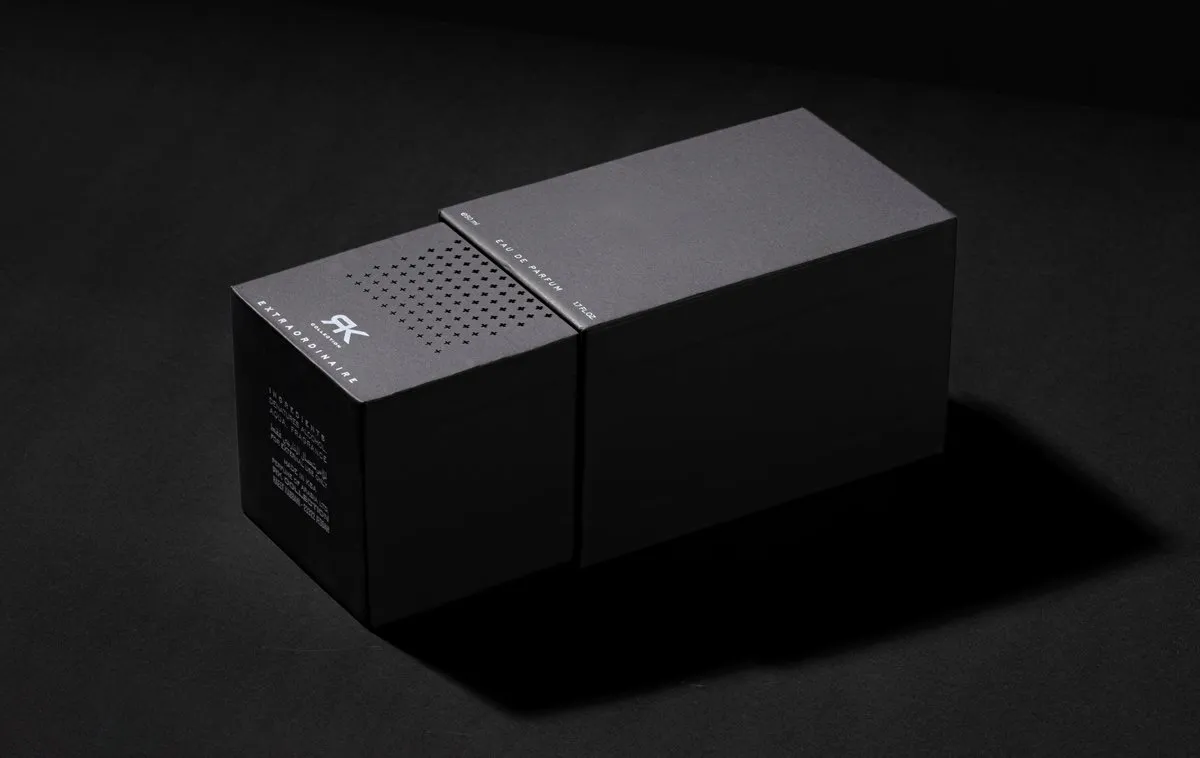
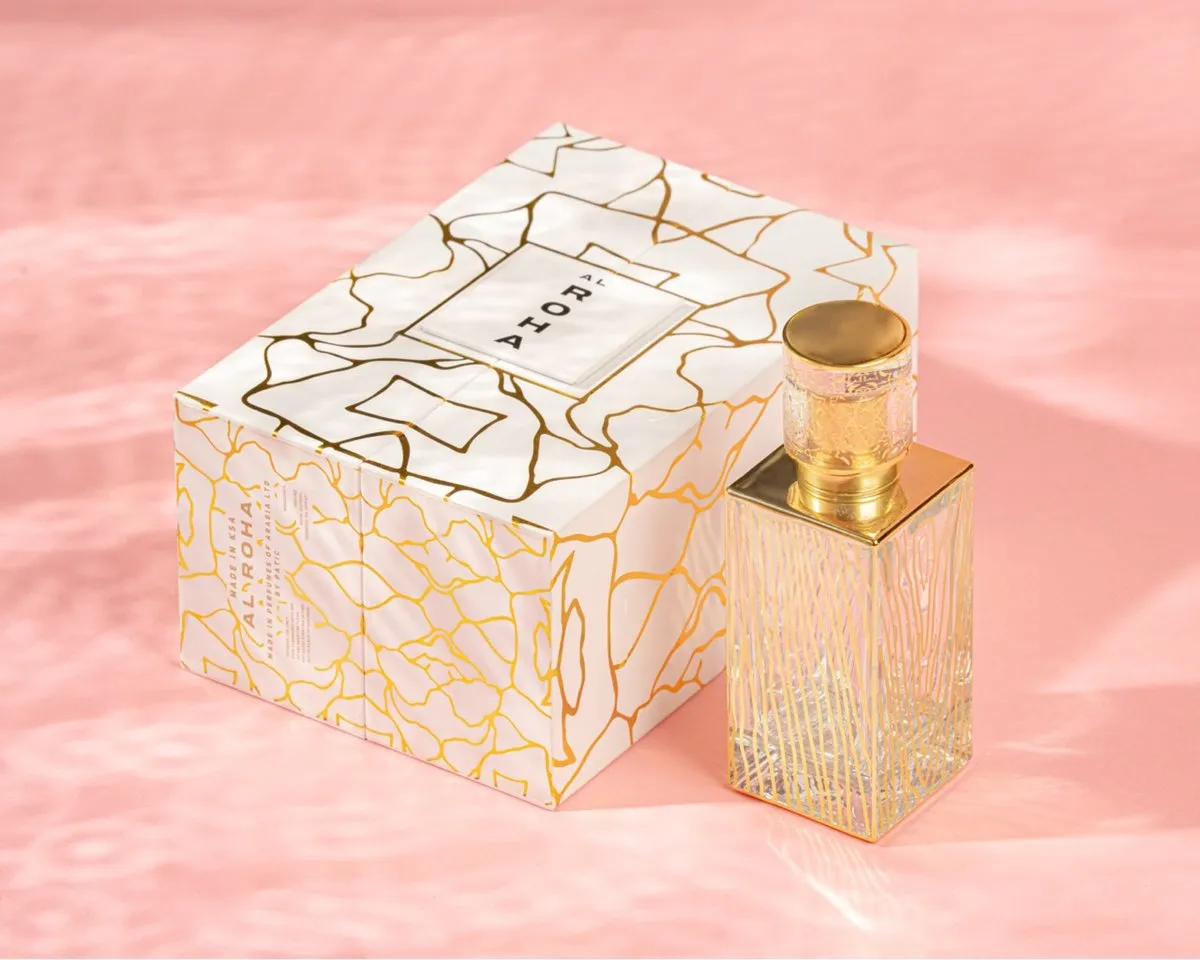
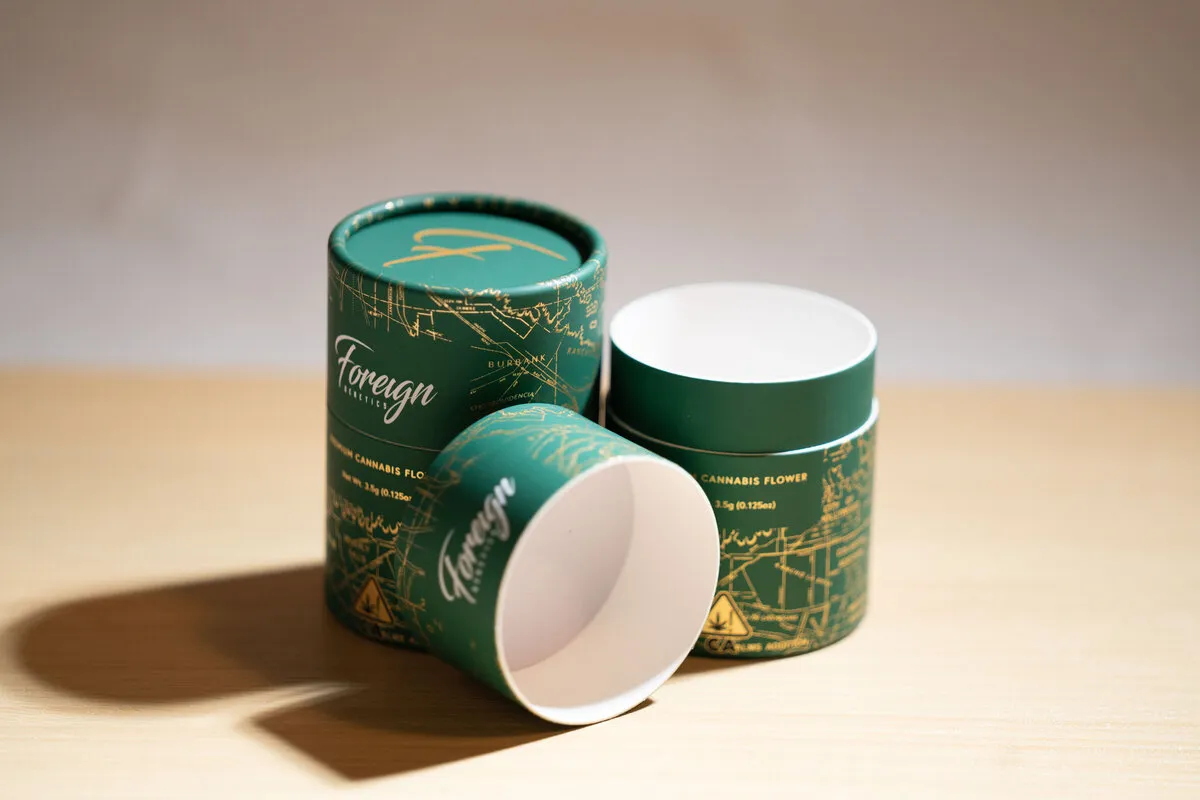
Fragrance packaging is the part of the product the customer touches first and keeps last: the box or tube usually survives the bottle, and it is what the brand is remembered by on a dressing table. Buying it well means deciding the structure first, the insert second, and the finishes last — with the bottle’s measurements on the table throughout.
1. Decide the structure
- Rigid box — greyboard walls wrapped in printed paper, lid-and-base, magnet or drawer closure. The presentation standard for eau de parfum, gift sets and collection boxes.
- Paper tube — printed cylinder with a matched lid. Tactile, lighter to ship, cheaper per unit than a rigid box; a strong fit for single bottles, attars and oils.
- Sleeve over a tray or clear box — printed sleeve with a lighter structure inside, useful when the bottle already has protective shape.
- Discovery set — a tray or box holding multiple vials with a printed card. Sold as a product in its own right, and usually produced alongside the main line so the levels match.
If a brand sells both a collection and single bottles, the usual pattern is a rigid box for the collection and a tube for the single bottle, sharing artwork and the same finishing language.
2. Specify the insert from the bottle
The insert holds the bottle at a fixed height, supports the neck and keeps the cap clear of the lid. It is die-cut to the exact dimensions of the contents — paper, EVA or flocked — and it is the part of the pack that decides whether the box feels engineered when it is opened. Give us the bottle body diameter, the total height, the cap width and the filled weight, and where possible send the bottle itself for the sample stage.
3. Choose the finishing
- Foil stamping — metallic or coloured foil on the logo, name or a pattern
- Embossing / debossing — raised or recessed detail, optionally with foil
- Spot UV — gloss detail on a matte or soft-touch surface
- Lamination — matte, gloss or soft-touch; the surface the hand remembers
- Structure finishing — ribbons, elastic, magnets, shoulder-neck closures
Colour matters as much as the finish: we print CMYK with Pantone spot colour and proof the pack against the bottle label so the two read as one product in daylight and under shop lighting.
4. Plan the sizes with the range
Most fragrance brands order more than one box. Deciding the whole size range — 30 ml, 50 ml, 100 ml, travel, refill, discovery — in one conversation means the same structure, board and finishing can be used across the line, which lowers the tooling and set-up cost per unit and keeps the presentation consistent.
5. Approve a sample with the bottle inside
The pre-production sample is where fit problems surface: a lid that is tight, an insert that presses the sprayer, a box depth that lets the bottle sit proud. Test the sample with the real bottle and in the closure position the customer will use — then, once approved, the specification, the die and the finishing stay on file, and reorders match it.
6. Think about shipping while the pack is still a drawing
Weight, volume and protection all affect freight, and packaging that ships with the bottle inside needs a different insert specification from an empty box that ships flat. Tell us the shipping method and the destination market at the quoting stage; it is much cheaper to design for it than to fix it at the port.